


Get started

Connecting investors and project owners — Pan-African infrastructure and energy, $5M–$50M project finance

We coordinate the introduction between investors and financing seekers, and stay involved through diligence and negotiation.

Deal size
$5M–$50M
Region
Pan-African
Sectors
Energy, transport, water, agriculture
Instruments
Equity, debt, mezzanine, structured
Scroll

Few deals, done properly.

We are deliberately a firm of few deals done properly: every opportunity is read, screened and prepared by the people who will stay with it until the parties are introduced and beyond.

—  Our approach

Our approach to every introduction.

Our coordination process covers the full arc from initial introduction through diligence and negotiation, with a small, senior team that has worked on transactions across the continent's power, transport, water, and energy sectors.

  • Energy
  • Transport
  • Water
  • Agriculture

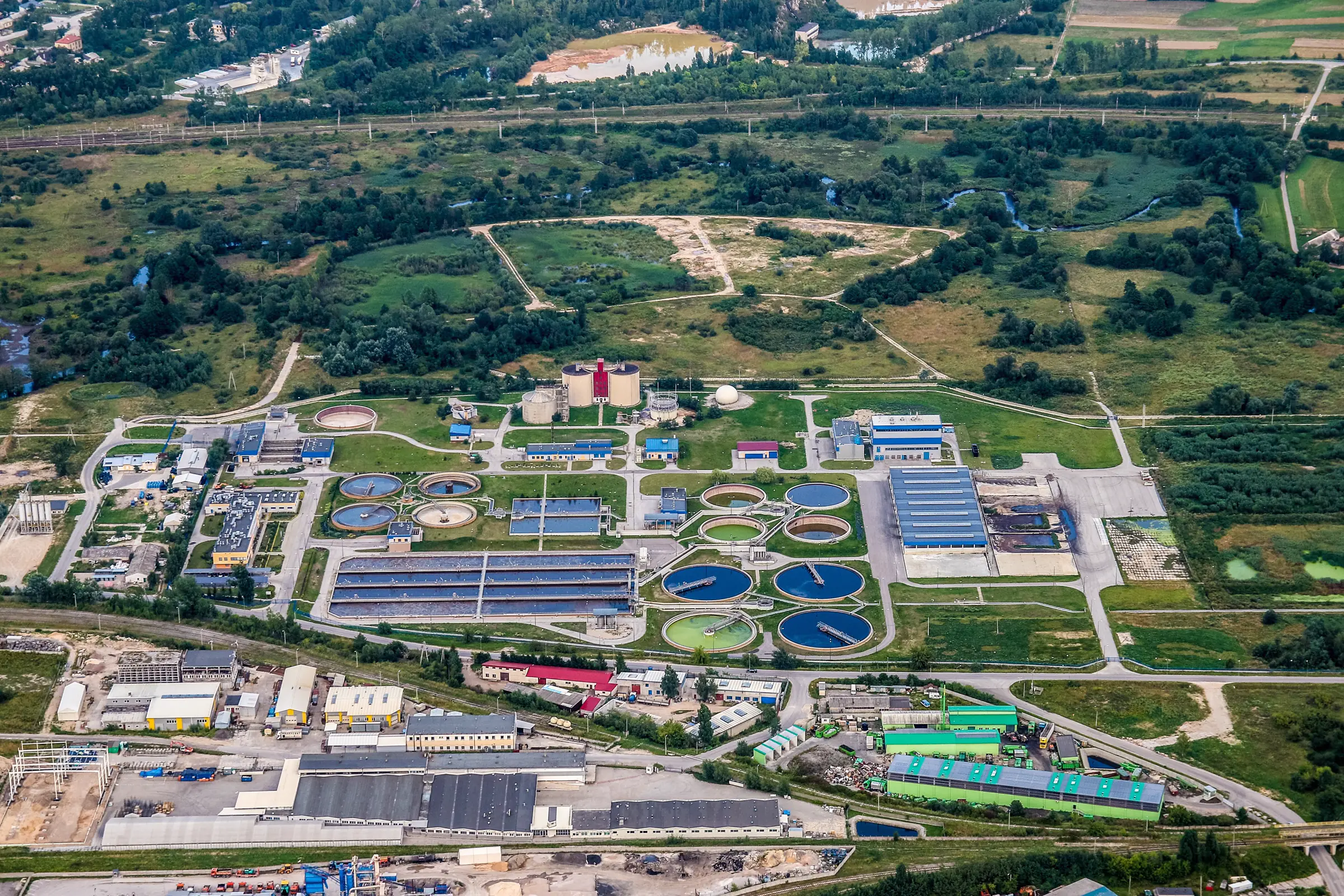
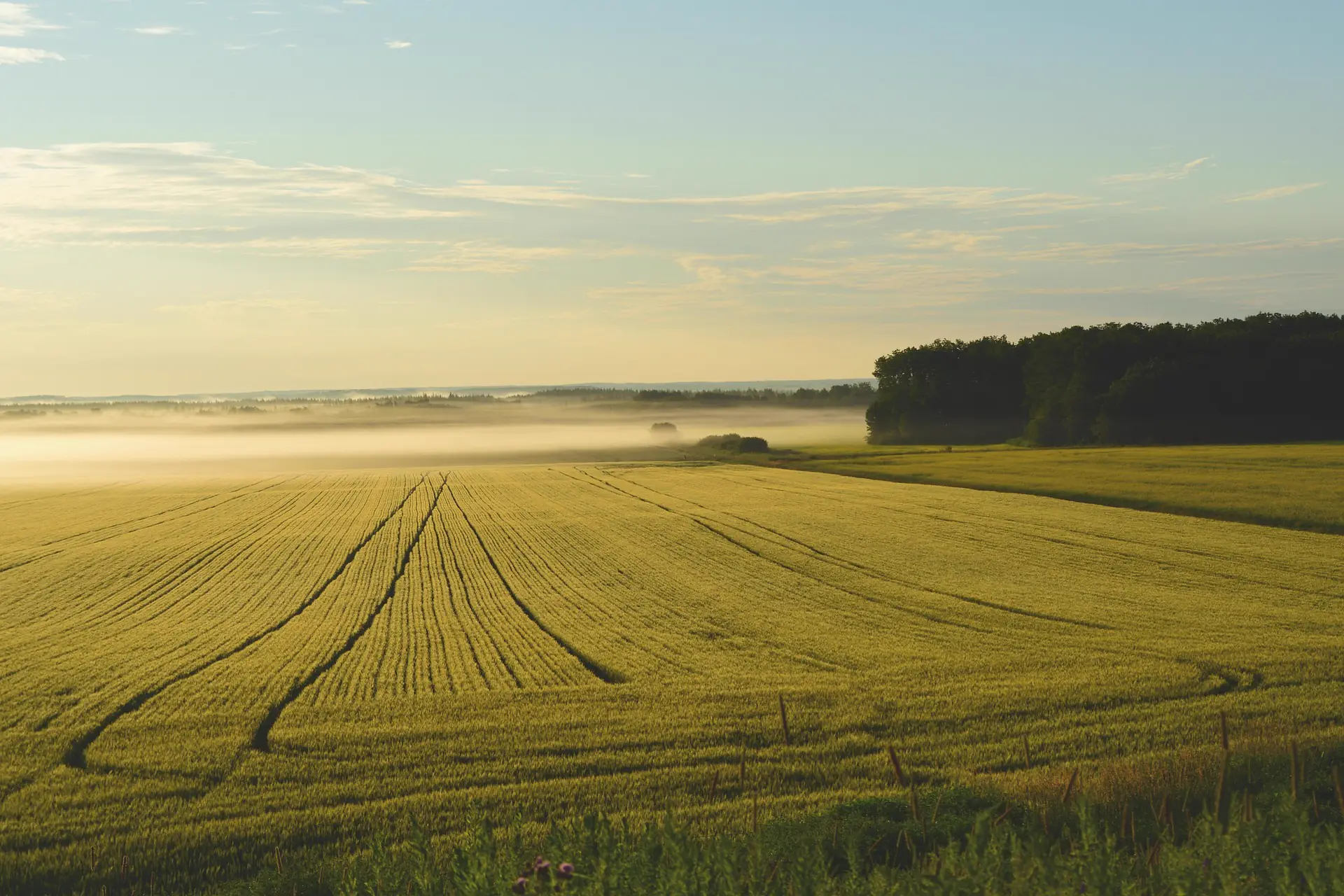
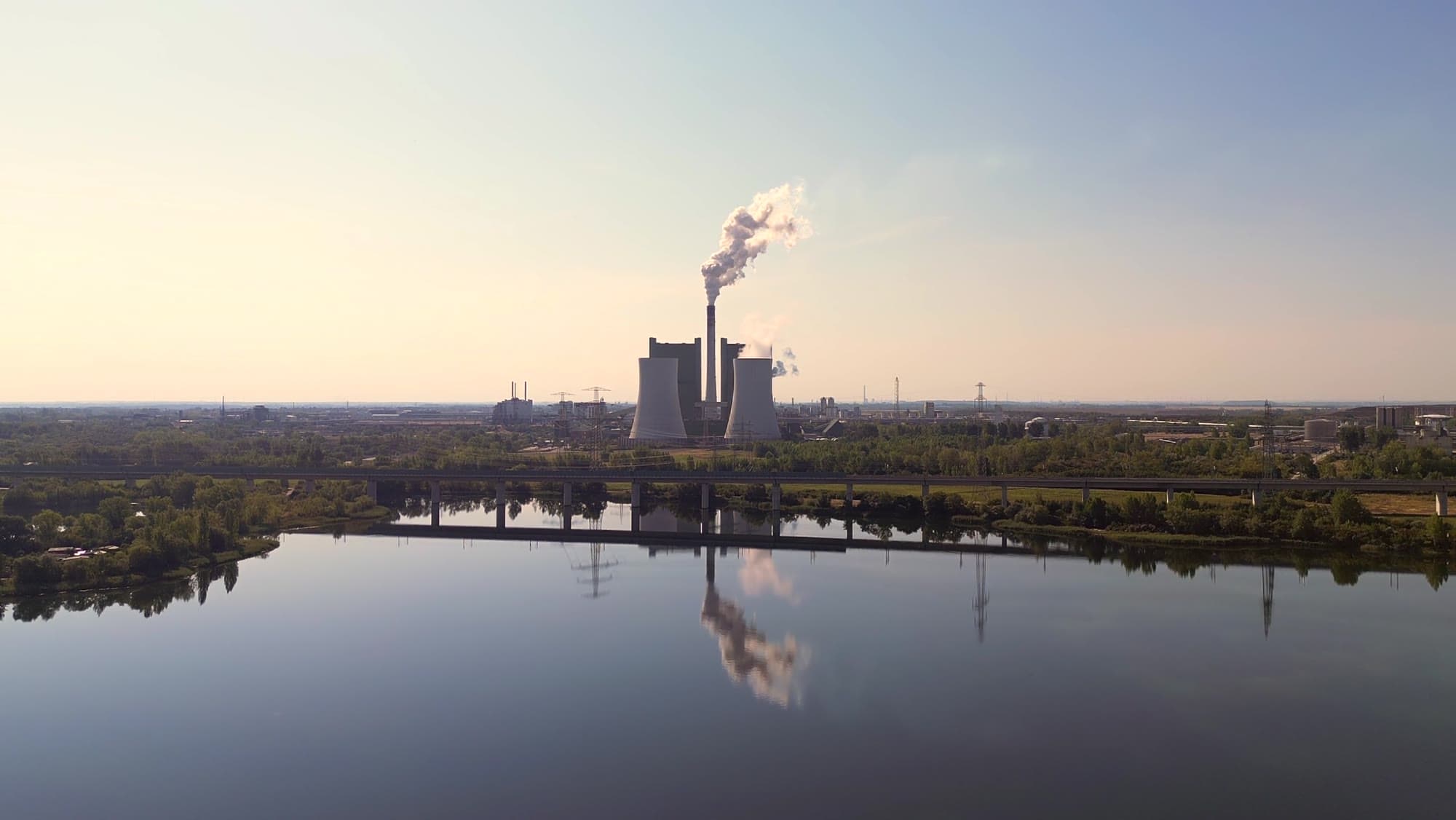
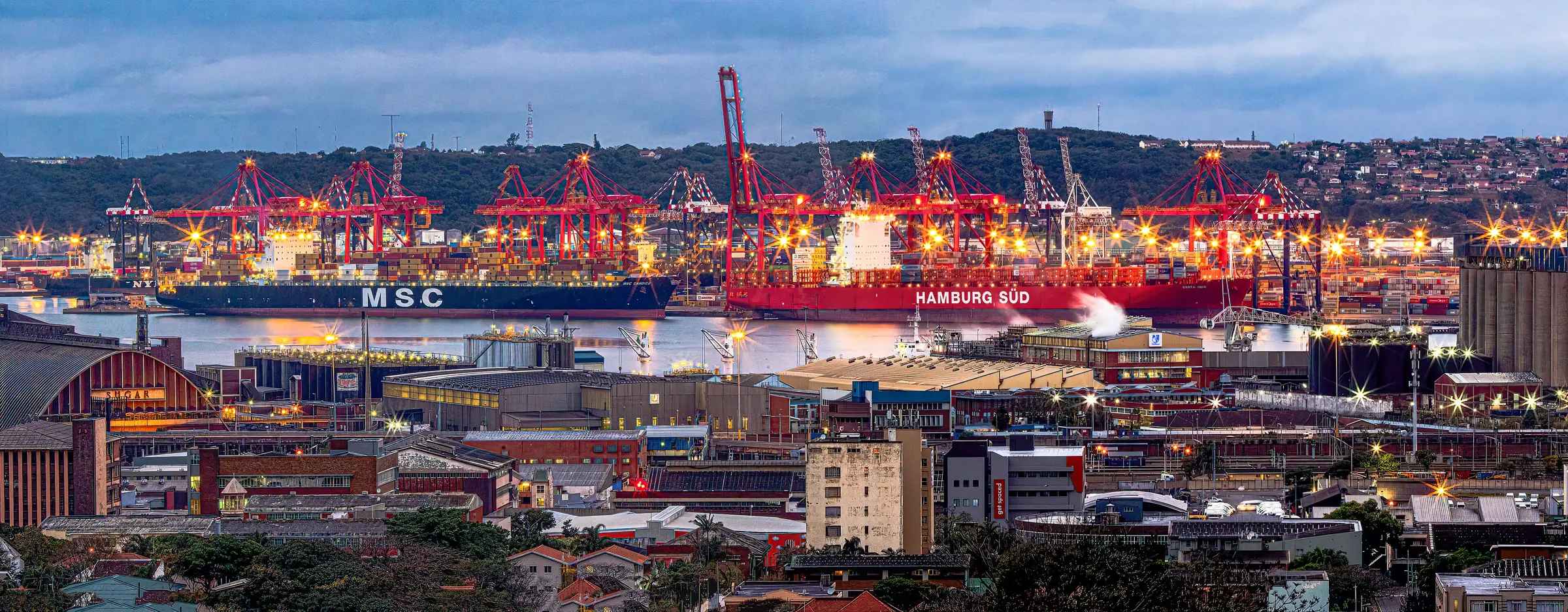
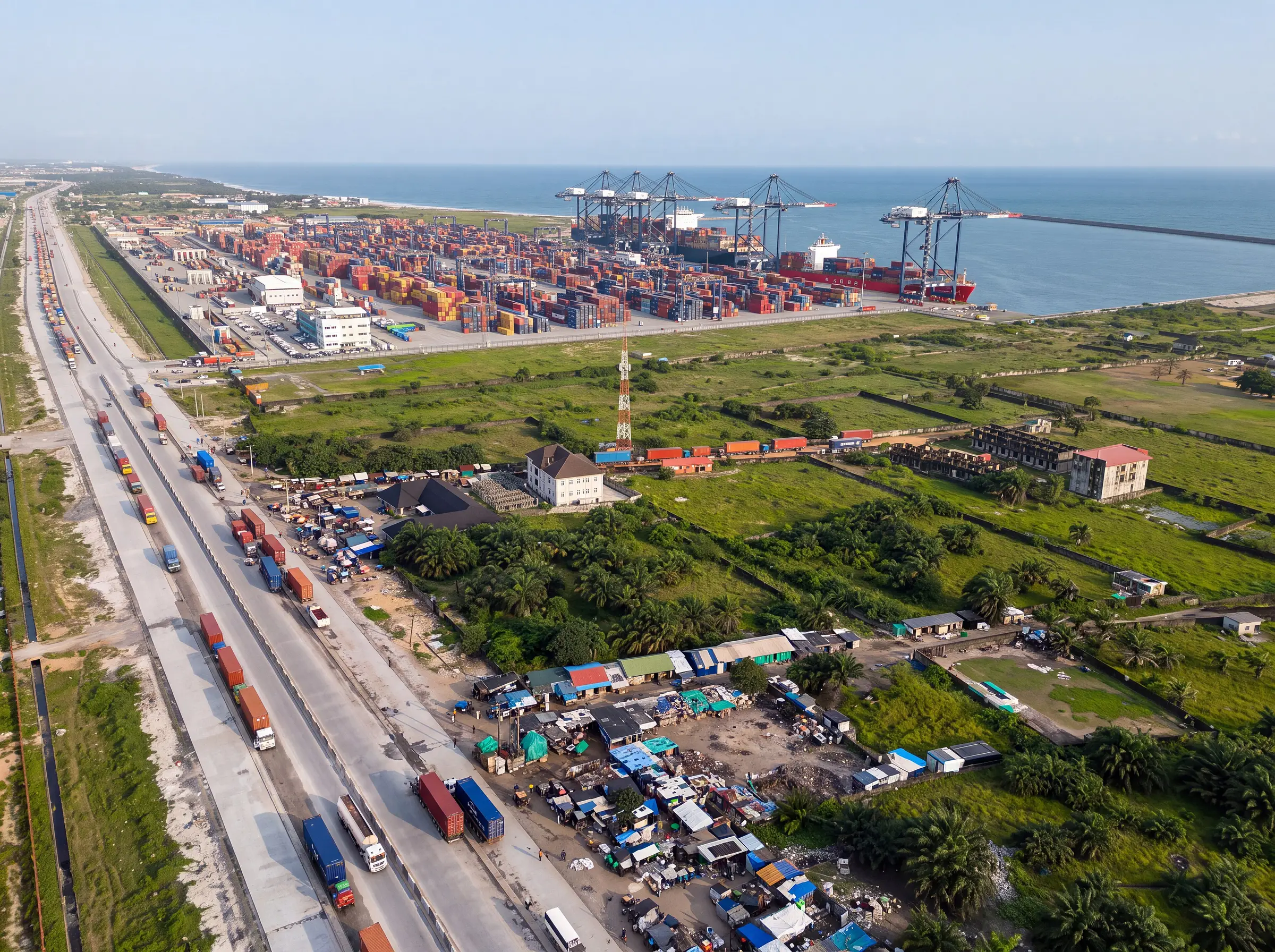
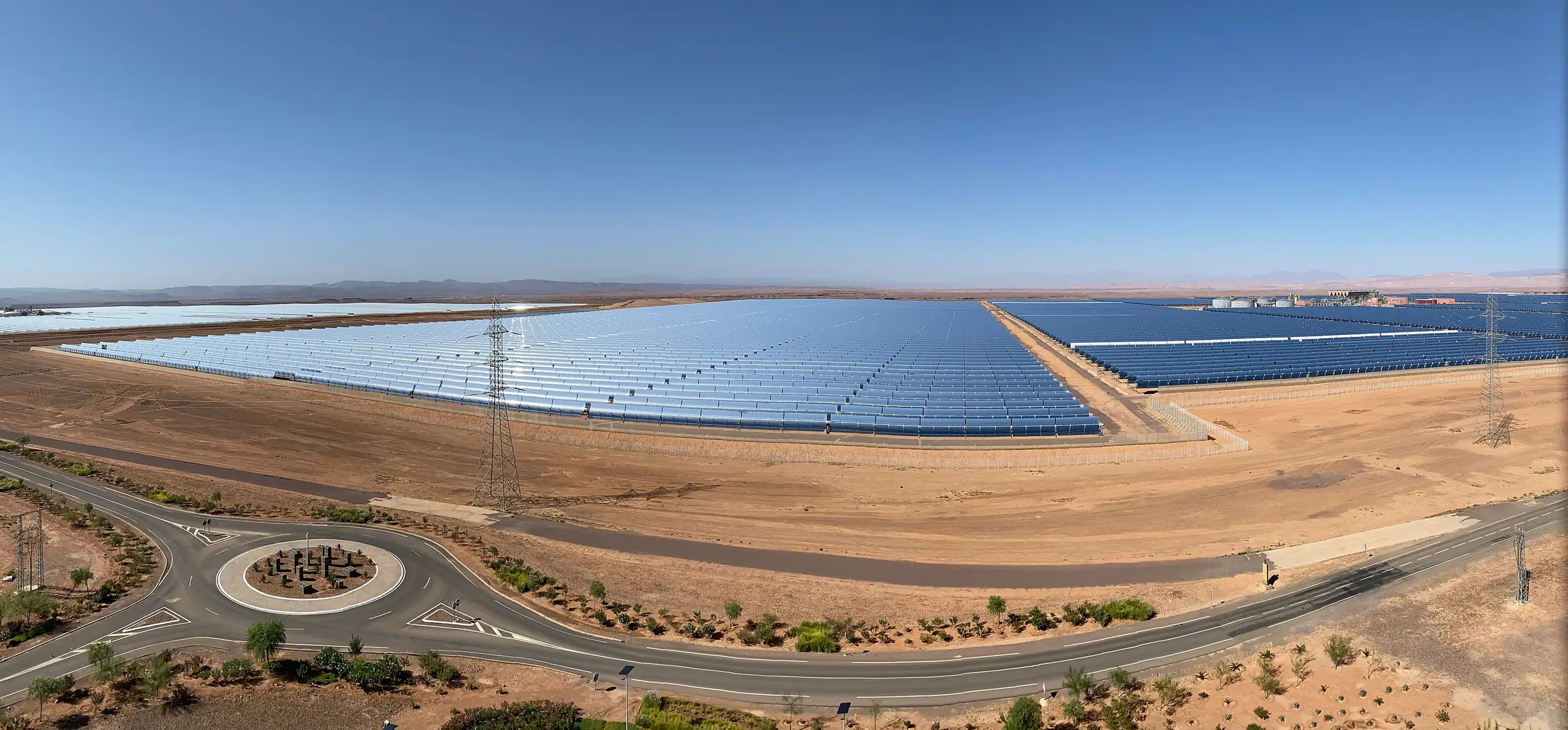
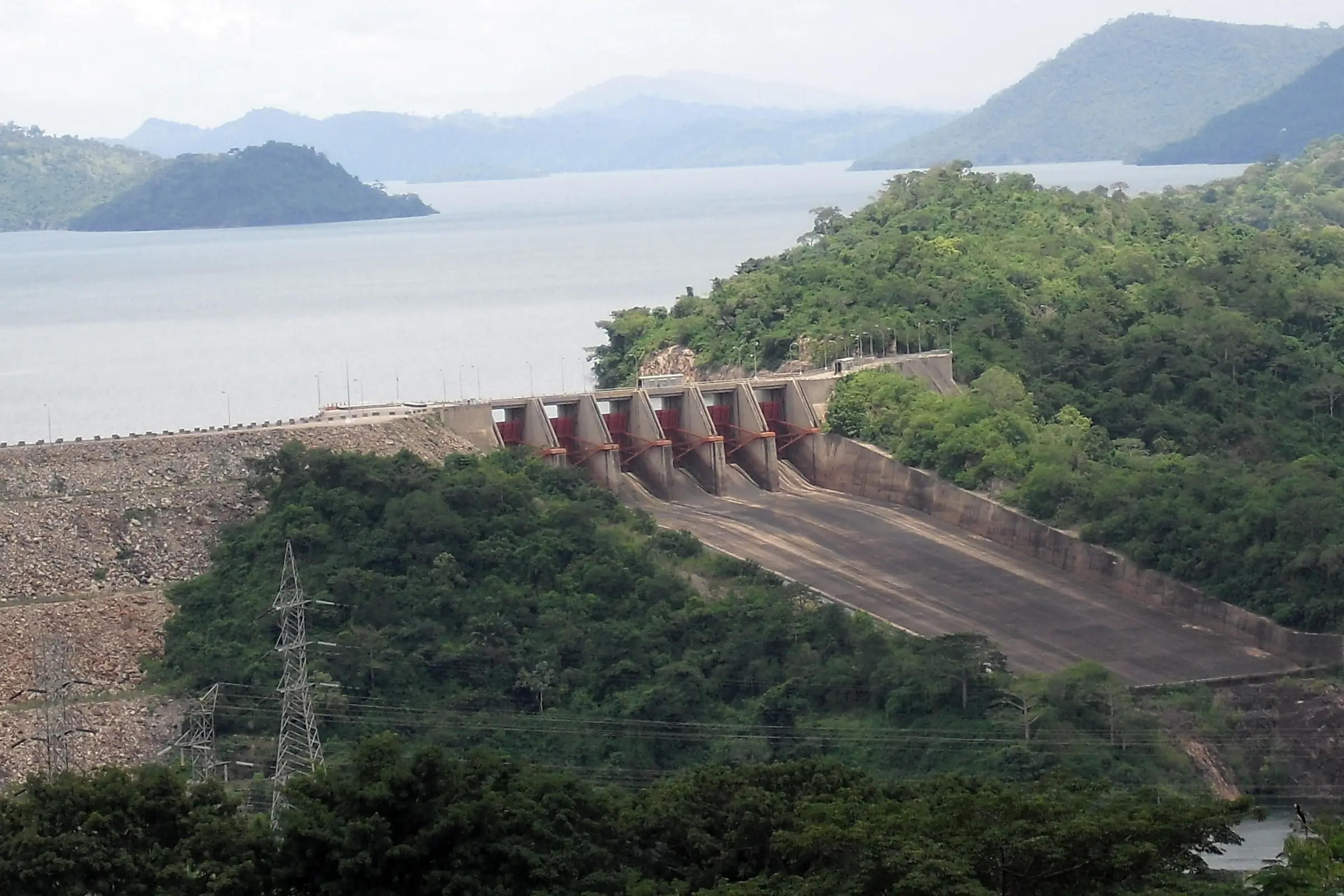
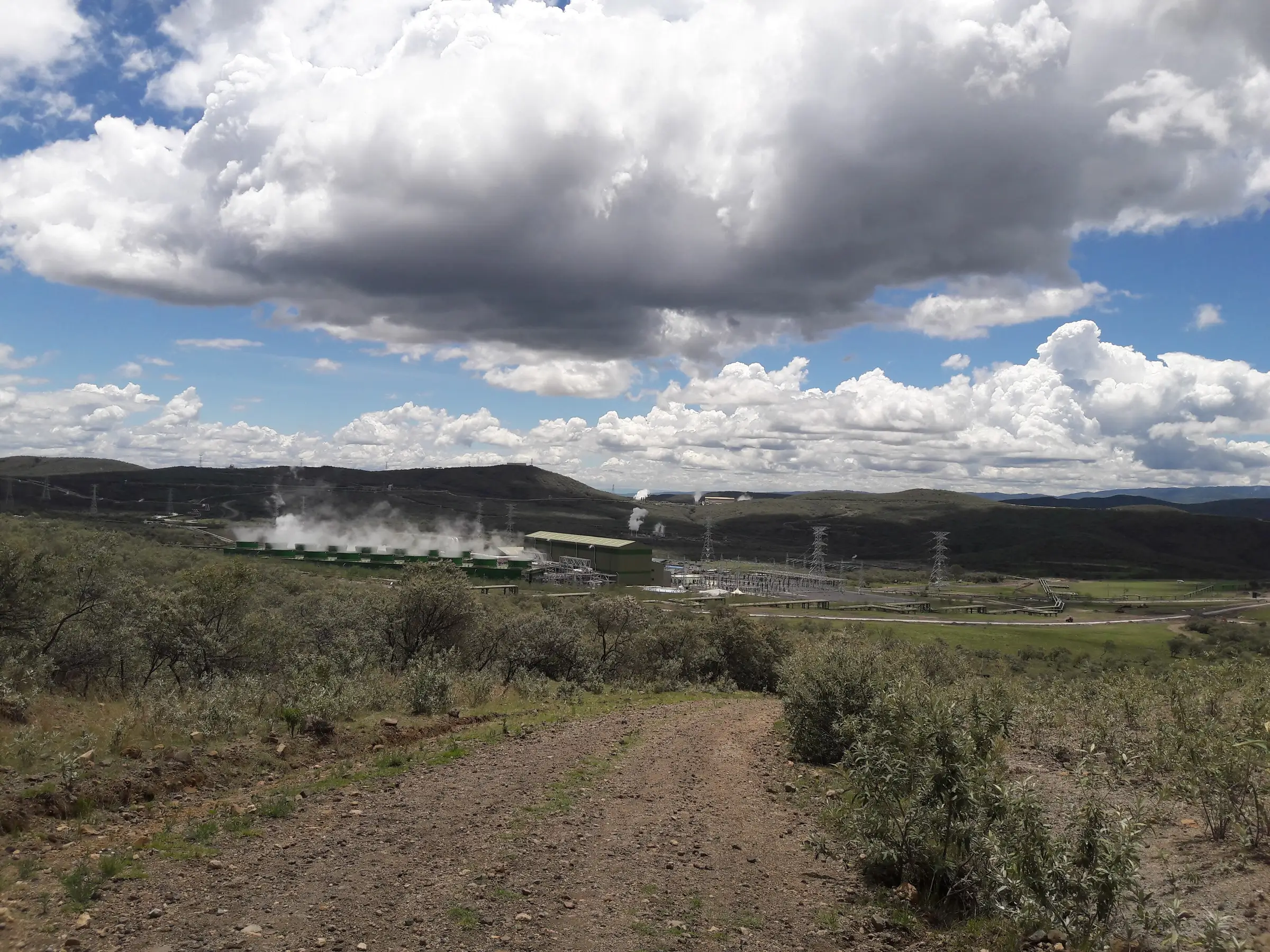
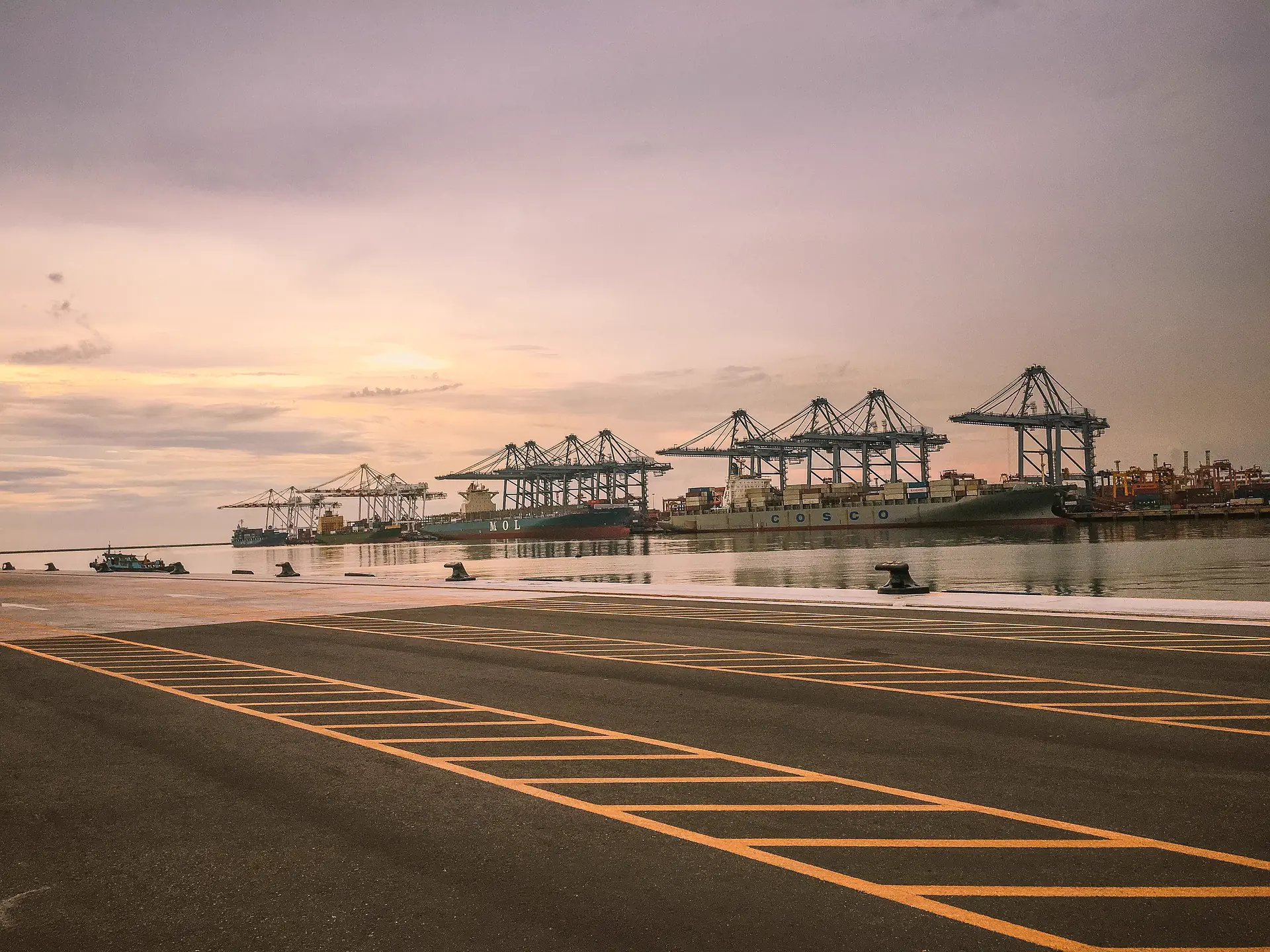
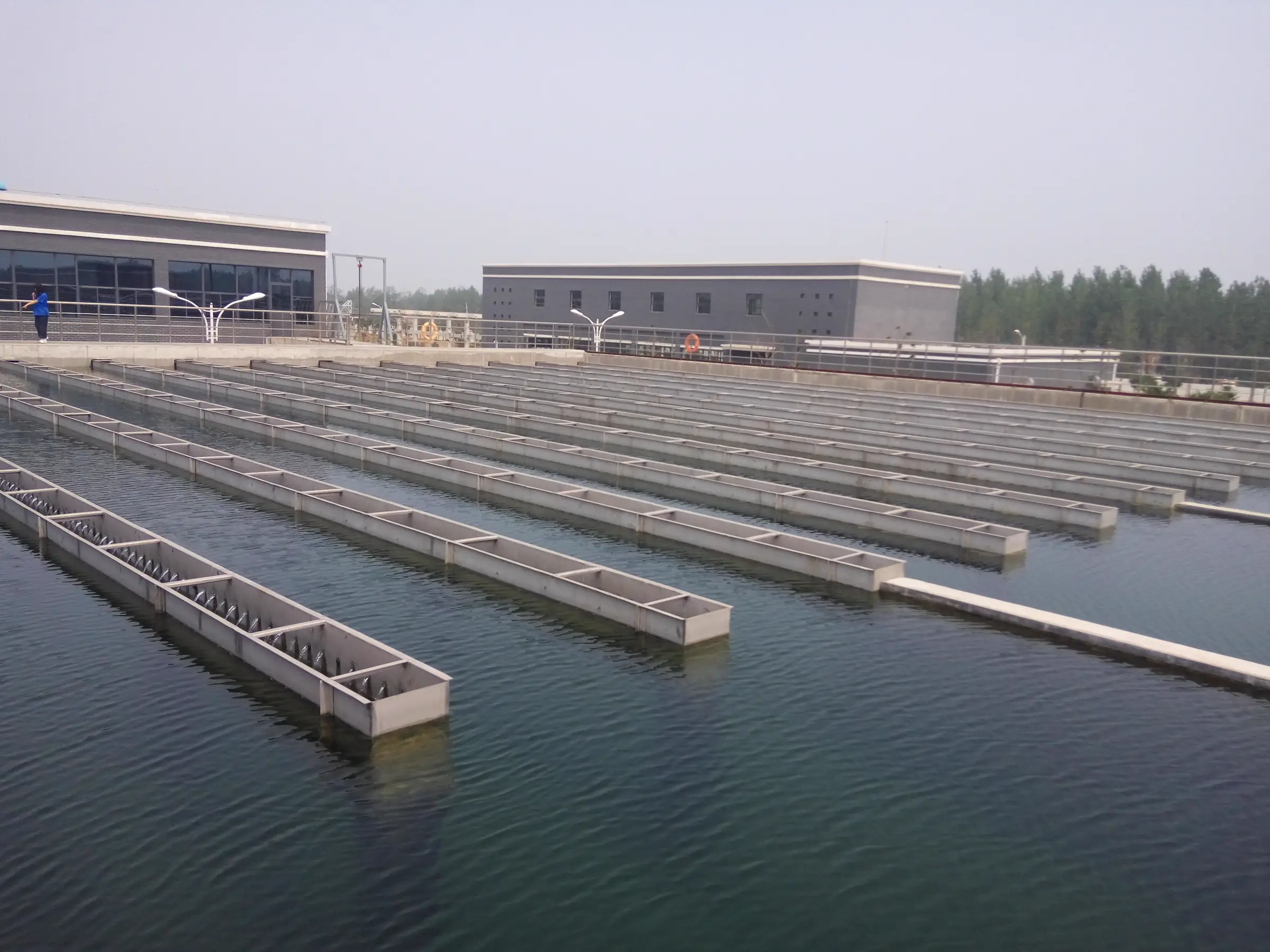
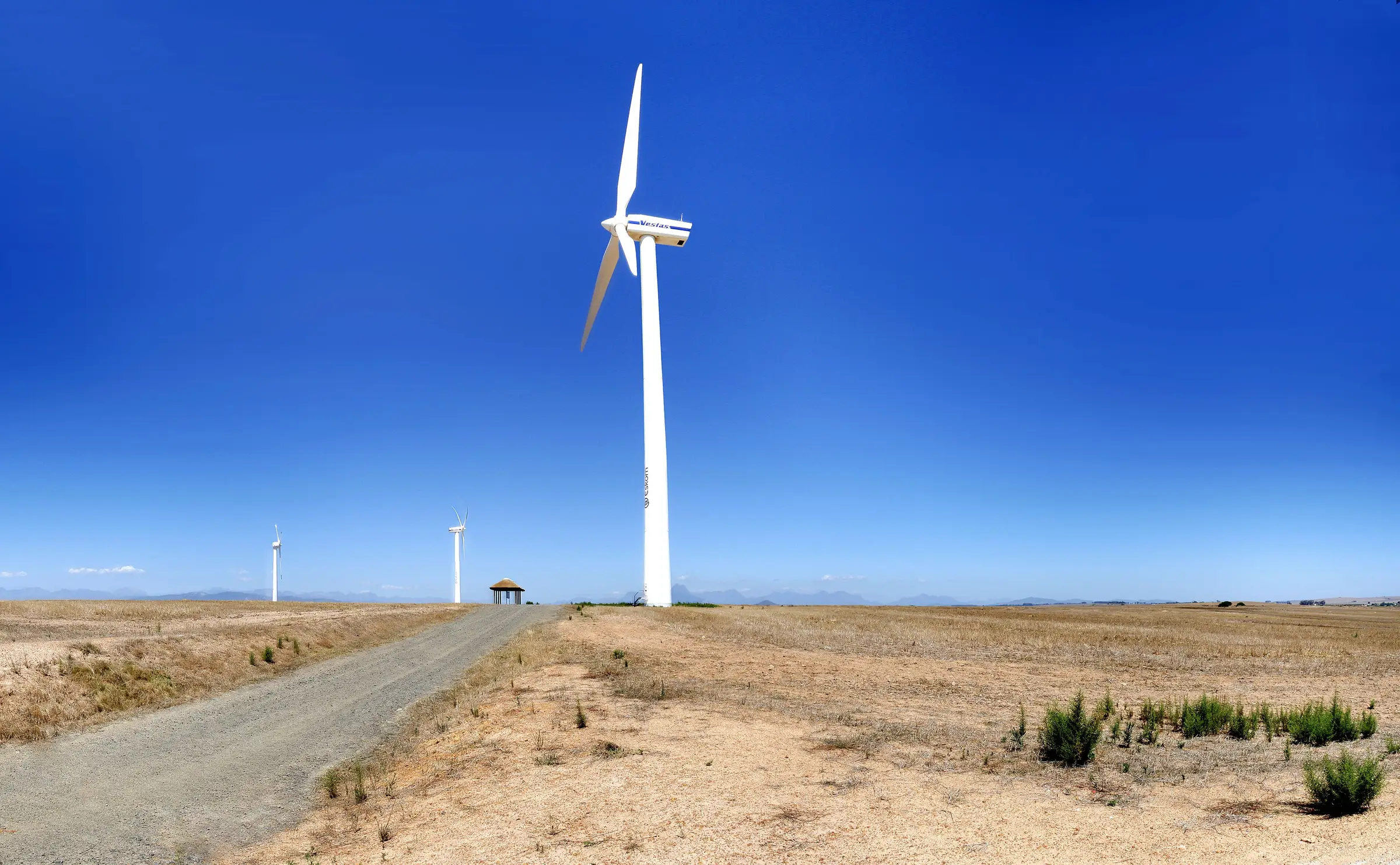
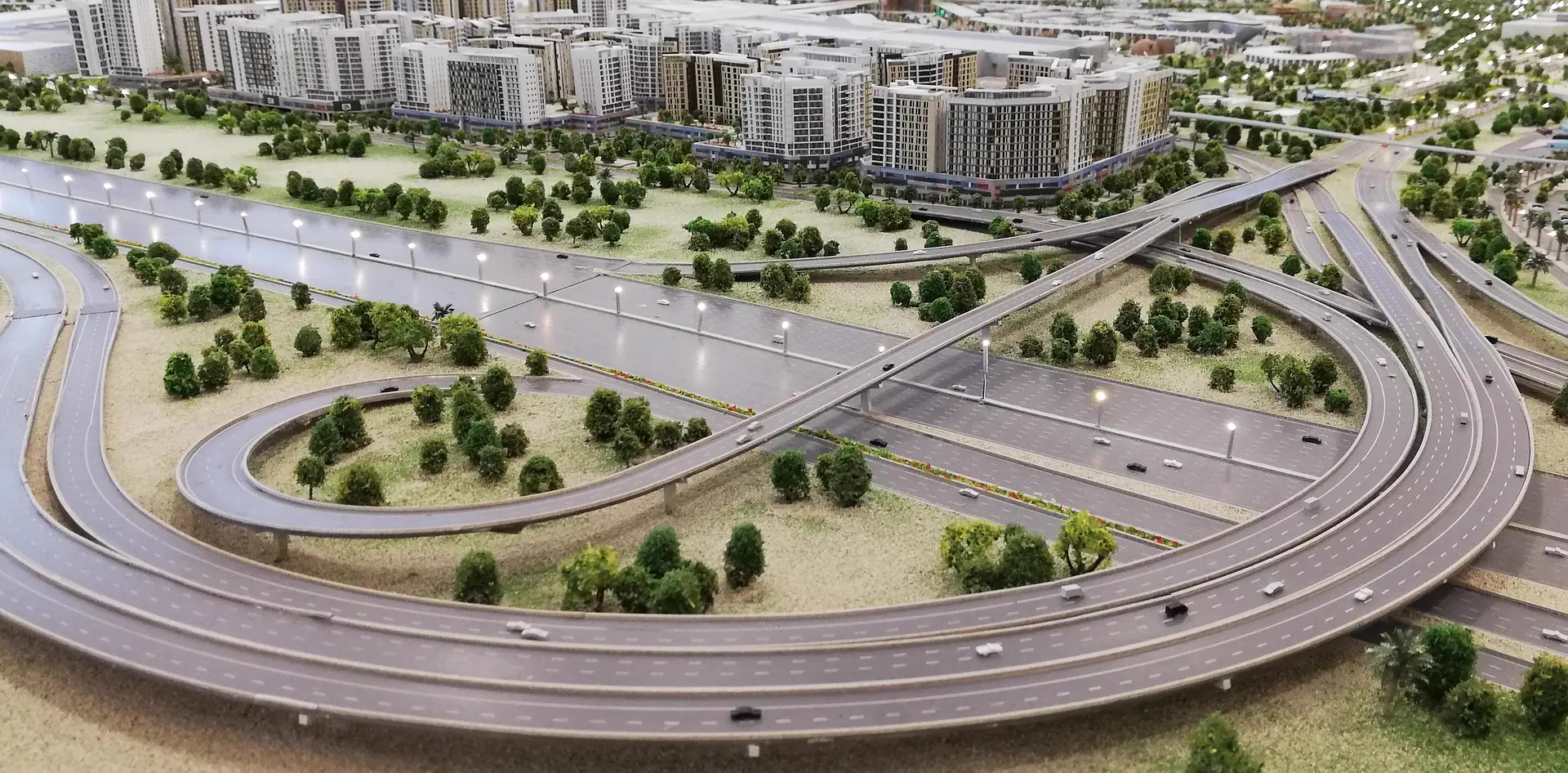
Footage: the sectors we work in, for illustration

#01 · How we work

A person reads every file

Every submission is reviewed by a member of our team against the same published process before anything moves forward. Software helps us shortlist; it never decides who sees what.

About us — A person reads every file

#02 · How we work

Confidential by design

Investors see an anonymous profile first. Names, documents and the full data room open in stages, each behind signed confidentiality terms, and every document is watermarked to the person reading it.

About us — Confidential by design

#03 · How we work

Everything on the record

Introductions, agreements and deal-room messages are kept in an append-only record the platform cannot edit or delete, so who was introduced to whom, and when, can always be shown.

About us — Everything on the record

#04 · Project sponsors

Readiness review

We read your project the way a lender will, against a published checklist, and tell you plainly what is missing before any investor sees it.

  • Permits, contracts and model checked
  • A clear list of gaps
  • Lender-grade checklist
Learn more — Readiness review

#05 · Investors and sponsors

Investor matching

Opportunities are screened against each investor's sectors, geographies, ticket size and instrument, and shown anonymously first.

  • Mandate-based shortlists
  • Anonymous profiles before names
  • Introductions only on a fit
Learn more — Investor matching
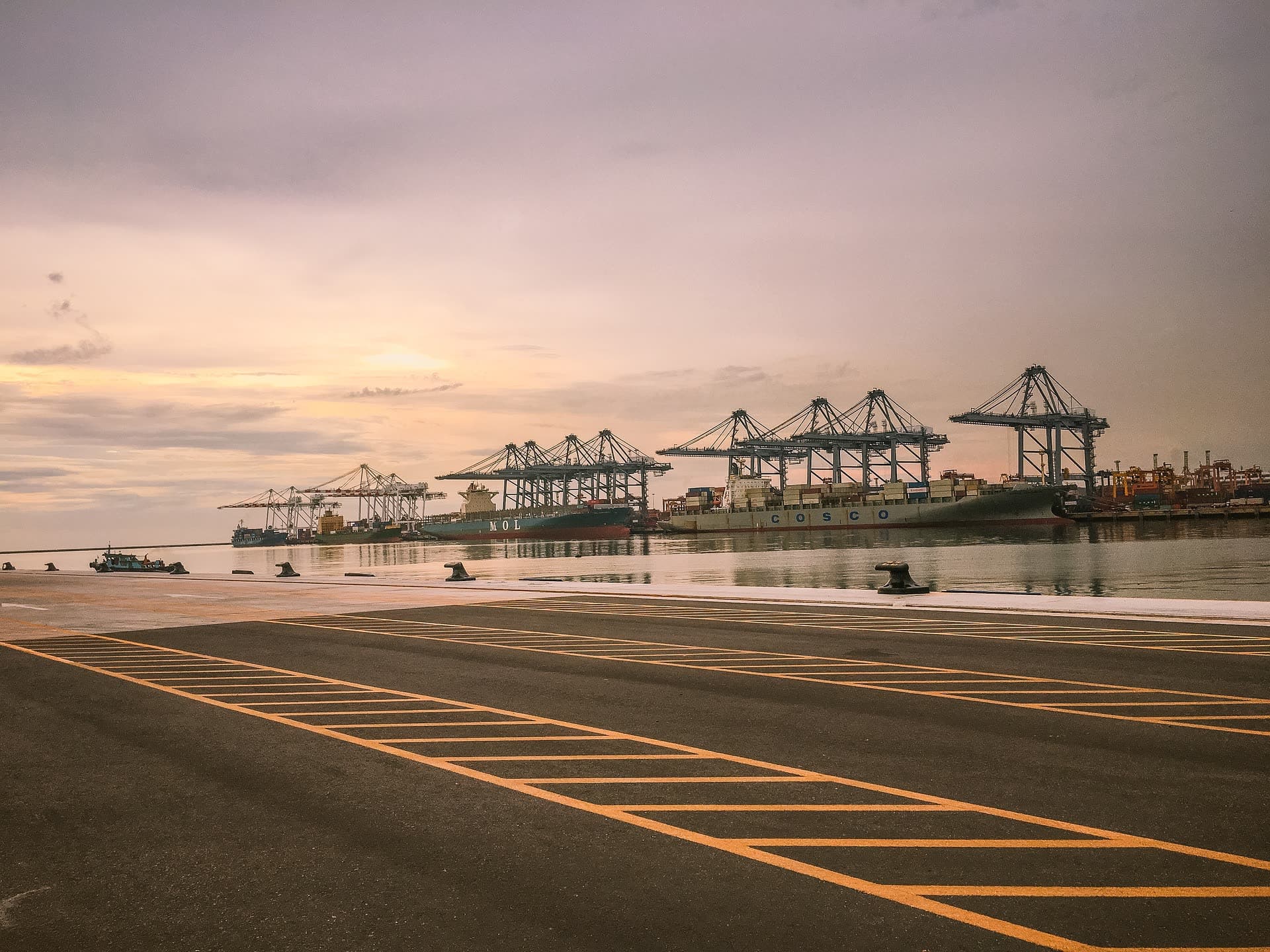
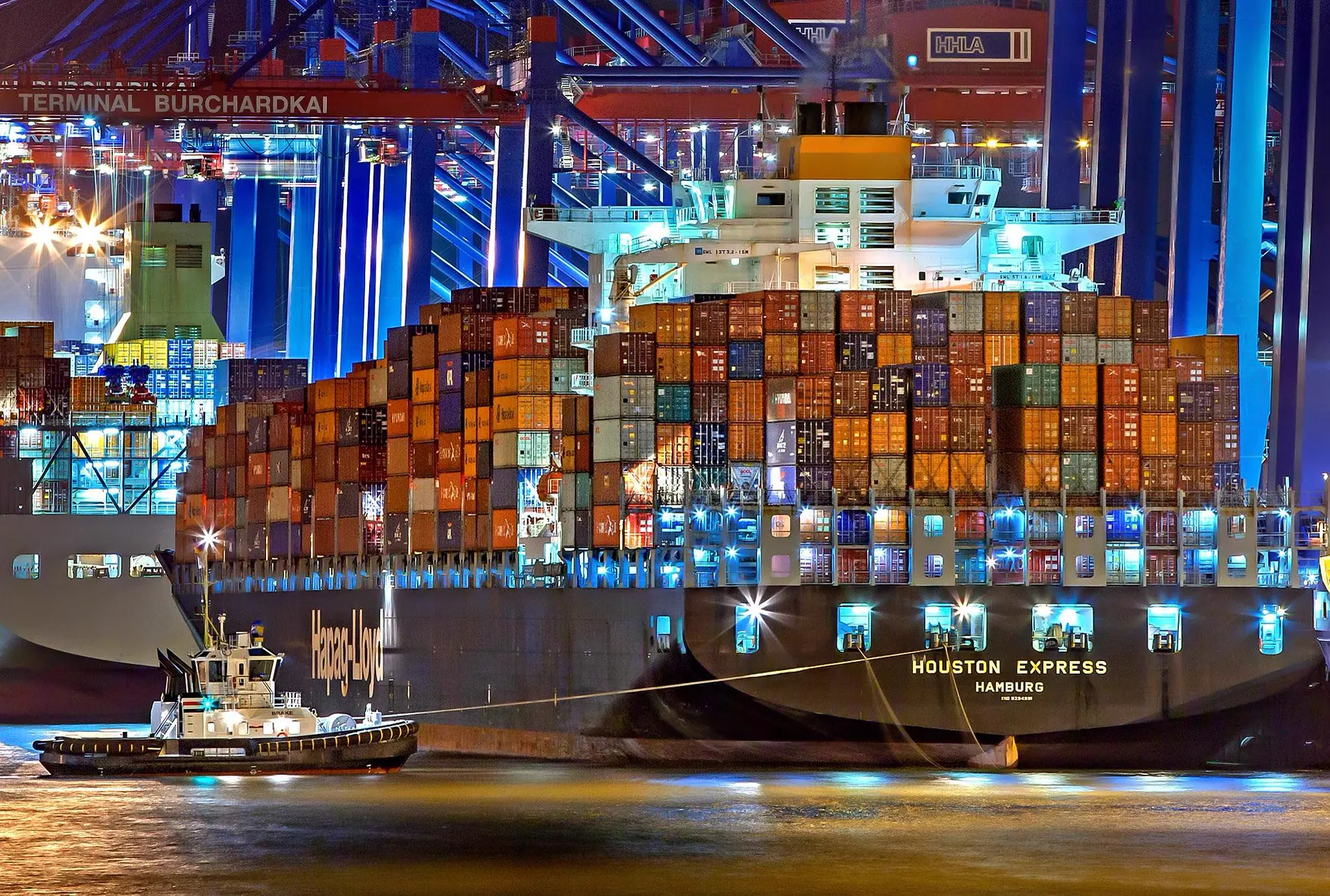
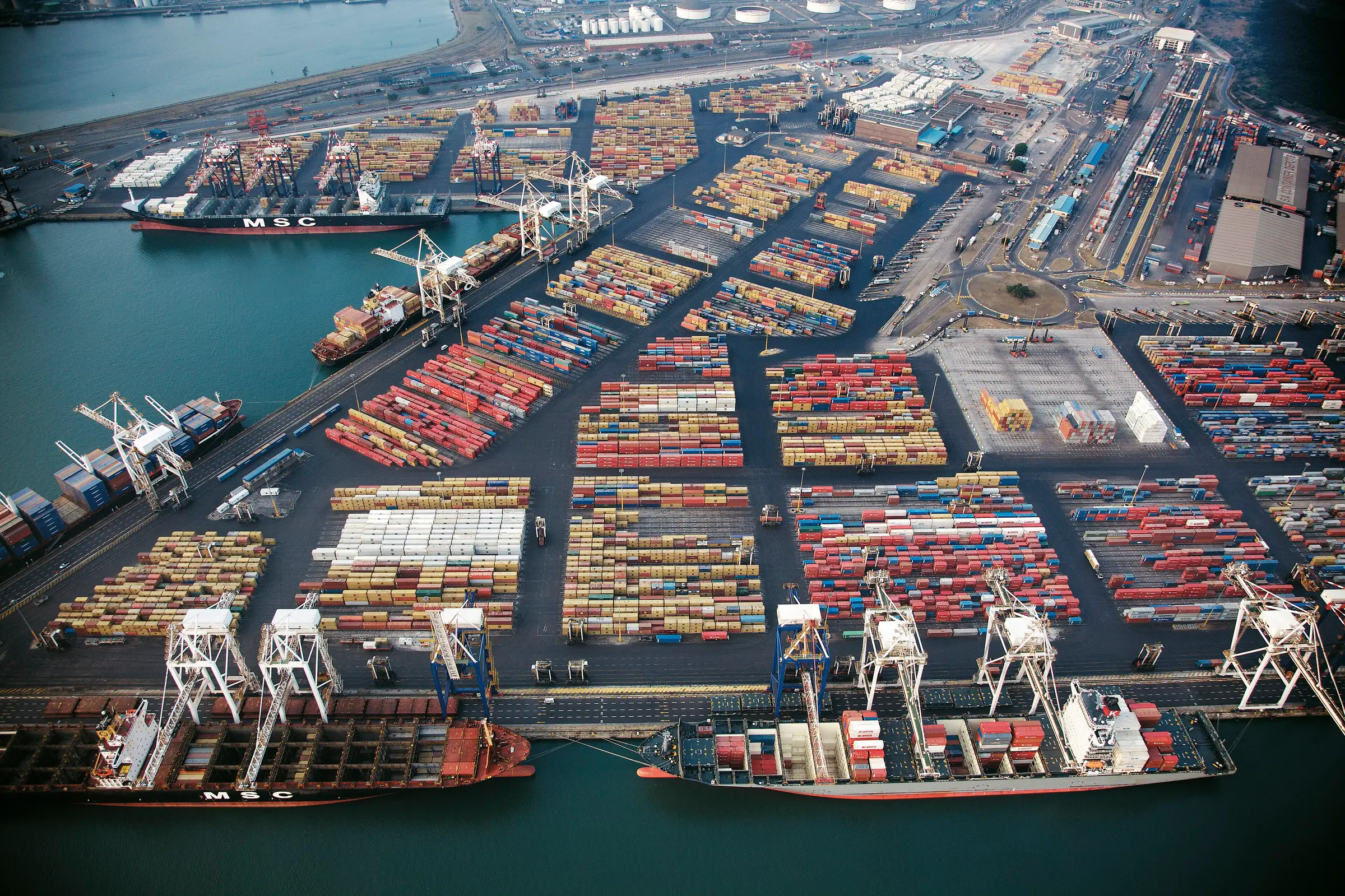
A container ship being worked at nightPhoto: Pixabay

#06 · Both sides

Transaction coordination

We run the process through diligence and negotiation: document requests, a diligence checklist, reminders and a record of every step.

  • Six published stages
  • Tracked document requests
  • Every step on the record
Learn more — Transaction coordination

#07 · Introduced parties

Confidential deal rooms

Each introduction gets a private room for messages and documents, opened behind signed confidentiality terms.

  • NDA before access
  • Watermarked documents
  • Data room opens in stages
Learn more — Confidential deal rooms

#08 · Every party

Verification & screening

Every party is identity-checked and screened against sanctions and politically exposed person lists before an introduction.

  • Identity checks
  • Sanctions and PEP screening
  • Recorded with the outcome
Learn more — Verification & screening

#09 · On request

Safekeeping

Where a party asks us to, we hold cash, securities or other assets in safekeeping and issue a numbered receipt that anyone can verify online.

  • Cash, securities or physical assets
  • Numbered receipts with QR codes
  • Status checkable at any time
Learn more — Safekeeping

#10 · For investors

Opportunities matched to your mandate.

  1. 01Opportunities screened against your stated mandate before you see them.
  2. 02A single point of contact throughout the process.
  3. 03Confidential handling of your enquiry — see our Privacy Policy.
Register your interest — Opportunities matched to your mandate.
A container ship being worked at nightPhoto: Pixabay

#11 · For project owners

Bring a project. Here’s what to send.

  1. 01A short summary of the opportunity and the amount you're seeking
  2. 02A pitch deck, summary, or financial model, if you have one
  3. 03Any permits, licences, or corporate documents relevant to the project
Submit an opportunity — Bring a project. Here’s what to send.
Inside the deal room

One confidential room for every introduction.

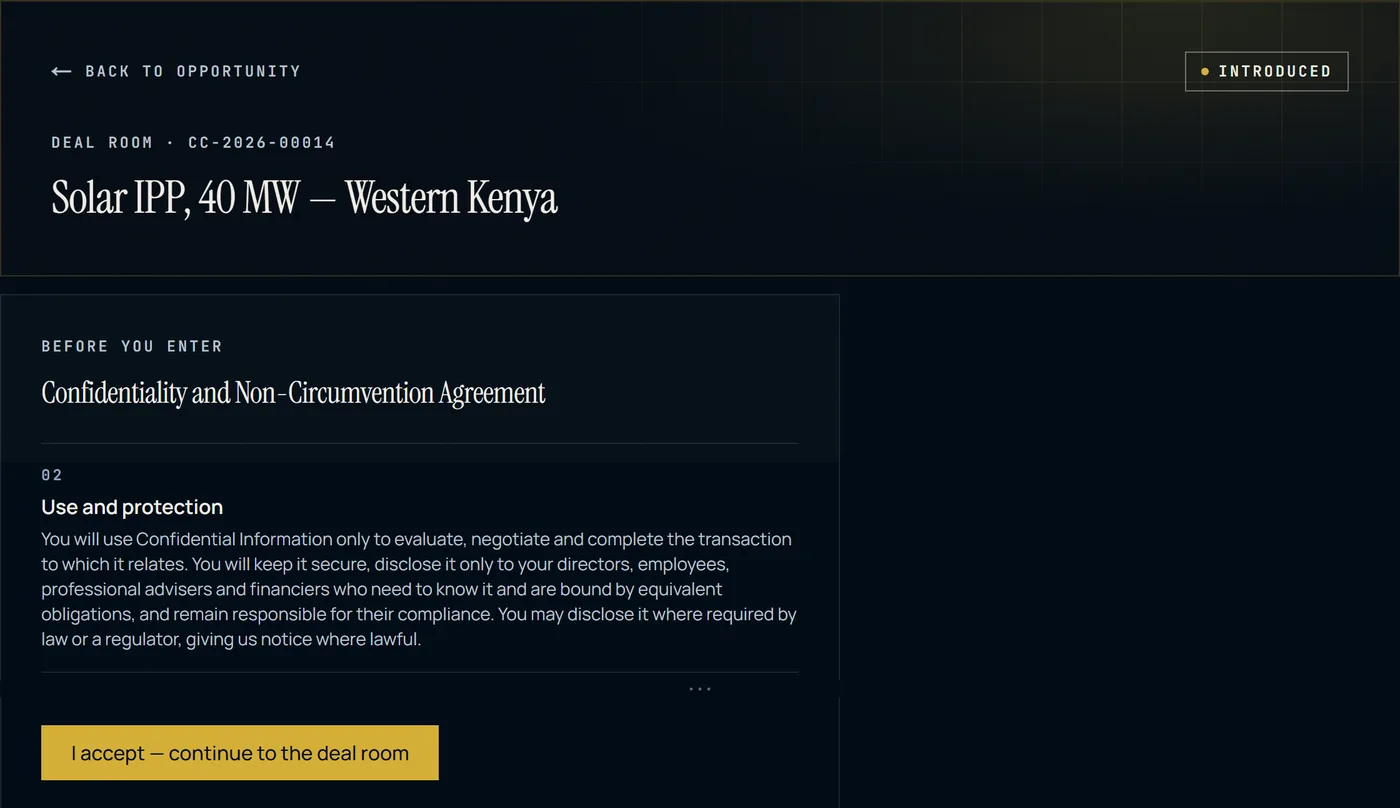
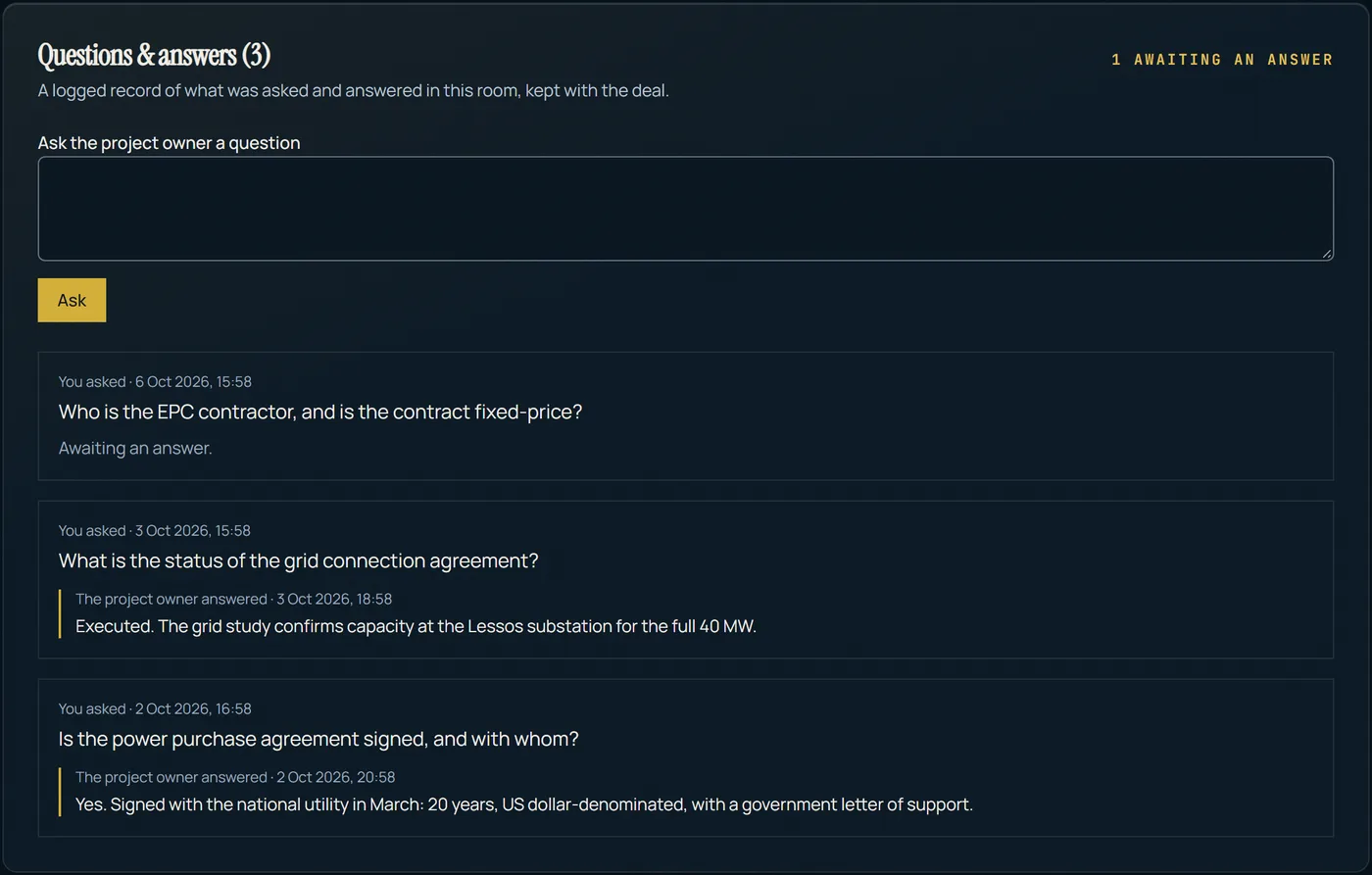
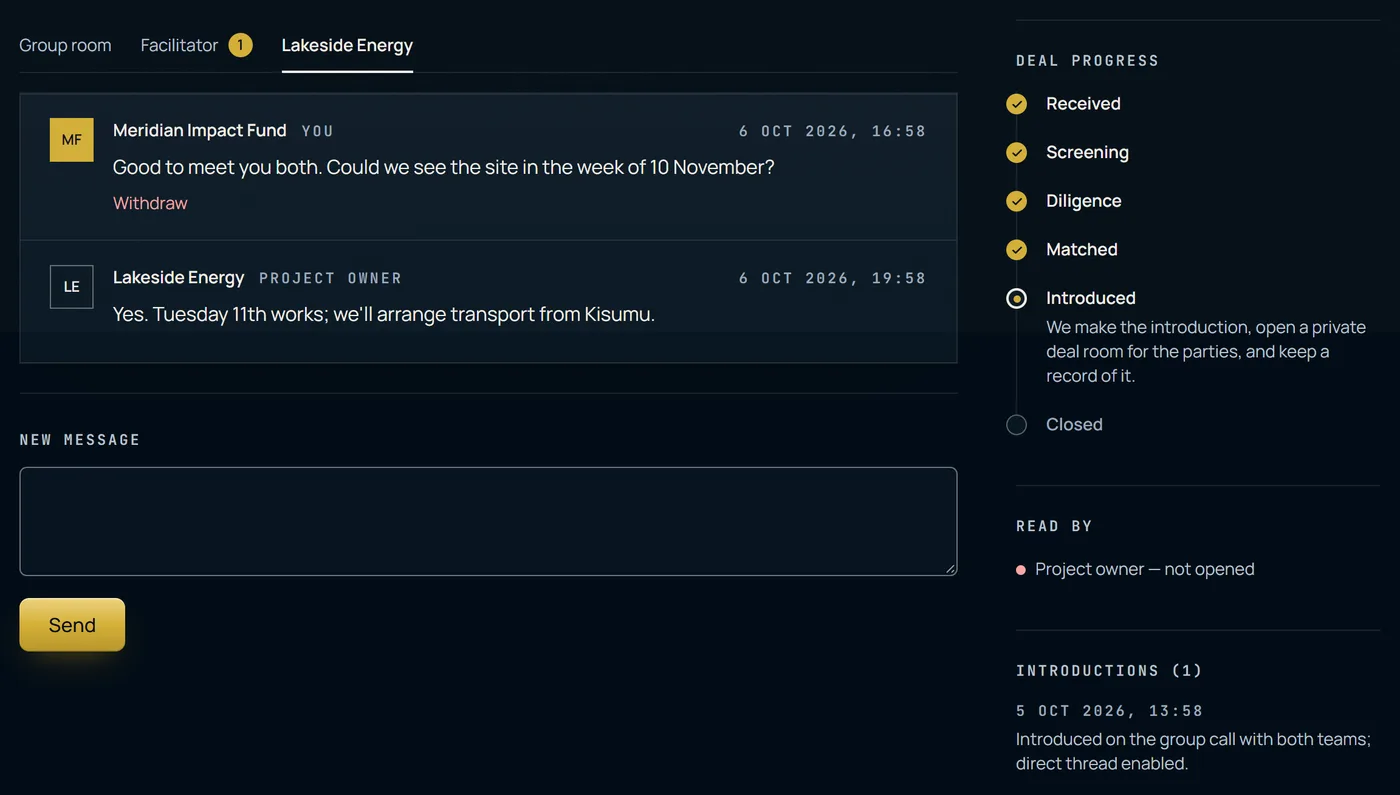
The deal room's entry screen: the Confidentiality and Non-Circumvention Agreement, with an “I accept — continue to the deal room” button.
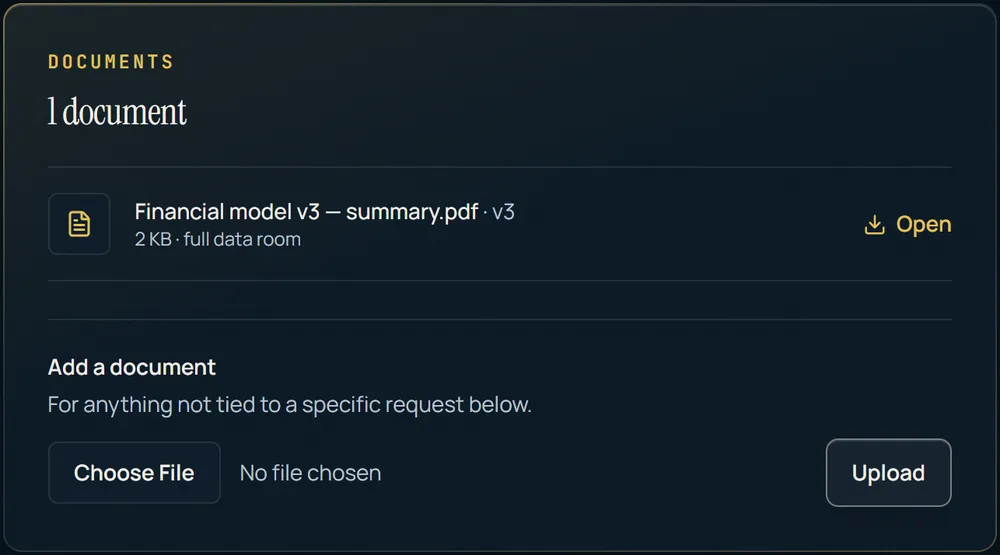
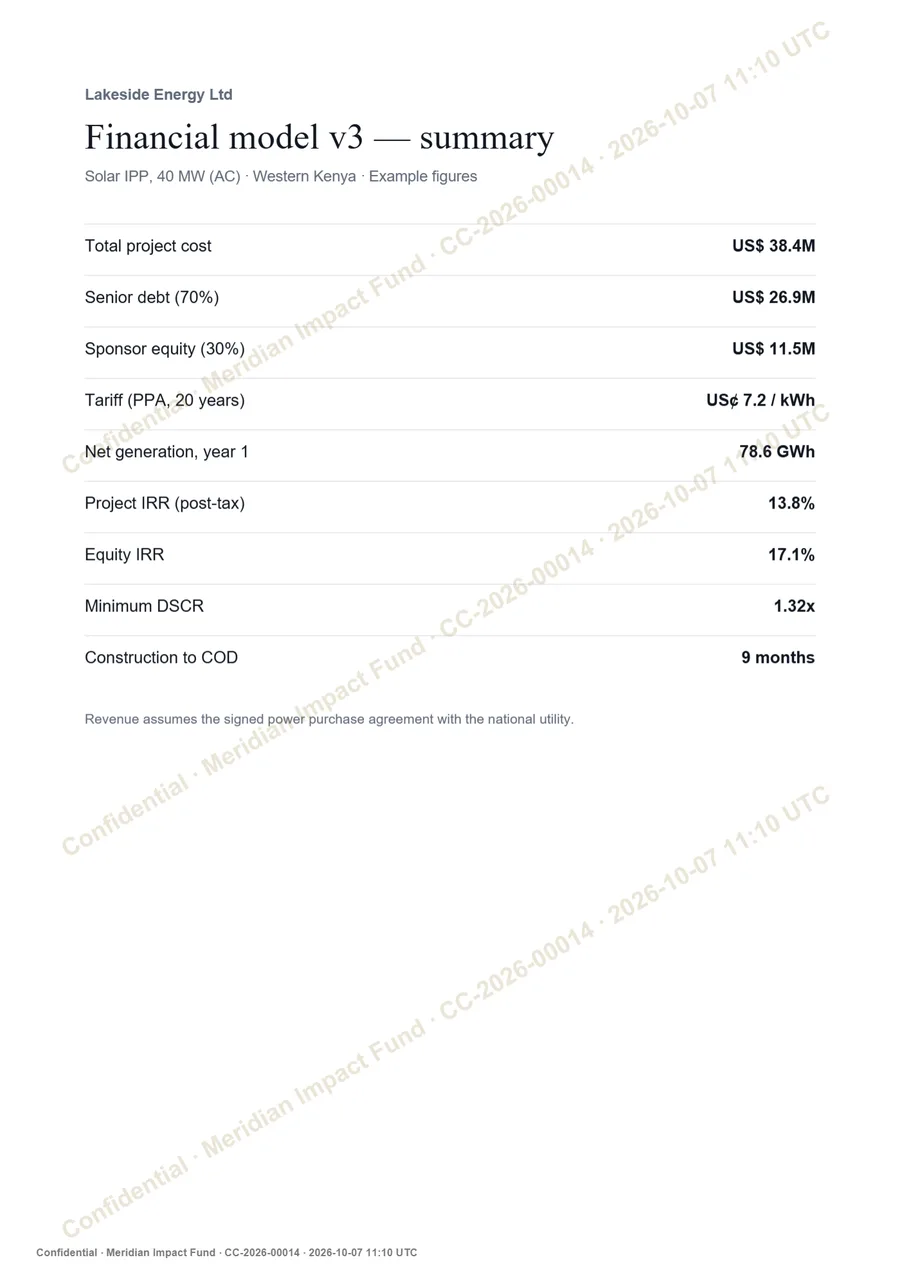
Real screens from the client portal, shown with an example deal. Names and figures are illustrative.
01  /  Process

Six stages, from submission to close.

Every step reviewed by a person
  1. 01

    Received

    We confirm receipt and log the submission for review.

  2. 02

    Screening

    Our team reviews the submission against our fit criteria.

  3. 03

    Diligence

    We carry out our due diligence process on the opportunity and the parties involved.

  4. 04

    Matched

    We identify a suitable counterparty from our network.

  5. 05

    Introduced

    We make the introduction, open a private deal room for the parties, and keep a record of it.

  6. 06

    Closed or rejected

    The opportunity reaches a transaction, or the process ends.

See the full process
The pipeline

Where deals stand, right now.

Every opportunity moves through the same six stages. Until our pipeline is large enough to publish without identifying anyone, this panel shows a labelled sample of its shape.

Pipeline

Illustrative sample

Active deals
26
Capital sought (USD deals)
US$312M
Countries
7
Sectors
4
Deals by stage
  • Received9
  • Screening7
  • Diligence5
  • Matched3
  • Introduced2
  • Closed1
Active deals by sector
  • Energy & Power11
  • Infrastructure & Transport8
  • Trade & Logistics4
  • Agriculture & Agribusiness3
View as table
Deals by stage
StageDeals
Received9
Screening7
Diligence5
Matched3
Introduced2
Closed1

An illustrative sample of the pipeline shape we work with — not Krestline Group's figures. Live aggregate figures replace it automatically once the pipeline is large enough to publish without identifying any deal.

Sectors & markets

Infrastructure and energy, across Africa.

Each sector has its own route to financial close. These are the questions we work through with sponsors before an investor ever sees the file.

Deal size
$5M–$50M
Region
Pan-African
Sectors
Energy, transport, water, agriculture
Instruments
Equity, debt, mezzanine, structured
AlgeriaAngolaBeninBotswanaBurkina FasoBurundiCabo VerdeCameroonCentral African Rep.ChadComorosCongoCôte d'IvoireDem. Rep. CongoDjiboutiEgyptEq. GuineaEritreaEthiopiaGabonGambiaGhanaGuineaGuinea-BissauKenyaLesothoLiberiaLibyaMadagascarMalawiMaliMauritaniaMauritiusMoroccoMozambiqueNamibiaNigerNigeriaRwandaS. SudanSenegalSeychellesSierra LeoneSomaliaSouth AfricaSudanSão Tomé and PrincipeTanzaniaTogoTunisiaUgandaW. SaharaZambiaZimbabweeSwatiniNairobi

Energy & power

Utility-scale solar, wind and hydro IPPs; commercial and industrial solar; mini-grids; transmission.

What we check first

  • A power purchase agreement with a creditworthy offtaker, or credit support where the utility is weak
  • Grid connection agreement and a grid study showing the network can take the power
  • Generation licence, tariff approval and, where offered, a government support agreement
Transport & logistics

Ports and terminals, toll roads, rail, inland container depots, cold chain and warehousing.

What we check first

  • A concession or PPP agreement with clear termination compensation
  • Traffic or throughput studies from an independent adviser
  • Who carries demand risk — the sponsor, the grantor, or a minimum-revenue guarantee

Water & sanitation

Bulk water supply, desalination, treatment plants and non-revenue water programmes.

What we check first

  • A take-or-pay or availability-based water purchase agreement
  • The payment track record of the municipal or national offtaker
  • Abstraction rights and environmental permits for discharge

Agriculture & agri-processing

Irrigation schemes, processing plants, storage, and export-oriented value chains.

What we check first

  • Secured supply — out-grower contracts, land rights and water rights
  • Offtake or export contracts, ideally in hard currency
  • Working-capital needs alongside the capital expenditure
What investors look for in each sector
Deal structure

How a project is usually financed

Most infrastructure is financed off the project’s own cash flows, not the sponsor’s balance sheet. A typical structure has three layers.

How development finance shapes the stack
Typical capital structure
Illustrative ranges
Senior debt
60–75%
Often led or anchored by development finance institutions, with commercial banks alongside. Repaid first.
Mezzanine or subordinated debt
0–15%
Fills the gap between what senior lenders will lend and what sponsors can contribute. Higher return for higher risk.
Sponsor equity
20–35%
The developer’s own capital, sometimes shared with an equity co-investor. Paid last, and gains the most.

Illustrative ranges only. The right structure depends on the sector, the offtaker, the currency and the lenders involved.

Safeguards

Built for a record that holds up.

The safeguards are part of the system, not a promise in a brochure. Each one below is how the platform works today.

  • Every party checked

    Identity verification and sanctions and PEP screening before anyone is introduced, with the check and its outcome recorded.

  • Confidential by default

    Investors see an anonymous profile first. Names, documents and the deal room open only after confidentiality terms are signed.

  • Documents traced to the reader

    Every download is watermarked to the person who opened it and logged, and links to files expire within minutes.

  • A record no one can rewrite

    Introductions, agreements and deal-room messages sit in an append-only log with a hash chain, checked daily for tampering.

  • Accounts protected

    Accounts are by invitation only, protected by two-factor sign-in, and every sign-in and privileged read is logged.

  • Receipts anyone can verify

    Safekeeping receipts carry a QR code that confirms, live, whether the assets are still held.

For project sponsors

Is your project ready for investors?

Seven questions lenders ask first. Answer honestly — it takes a minute, and nothing you choose is sent anywhere.

  1. 01Are land rights or a long-term lease secured?
  2. 02Is an environmental and social impact assessment (ESIA) complete?
  3. 03Are the key licences and permits in hand?
  4. 04Is there a signed or advanced offtake agreement with a buyer that can pay?
  5. 05Is there a fixed-price, date-certain EPC contract (or a shortlist)?
  6. 06Is there a financial model a lender could audit?
  7. 07Is the sponsor's own equity contribution committed?
02  /  Boundaries

What we don’t do.

We introduce investors to project owners and financing seekers, and coordinate the process between submission and introduction. We hold assets in safekeeping only when a party asks us to, we do not give investment advice, and we do not guarantee any outcome.

  1. 01

    We do not move funds between investors and project owners. Assets deposited with us for safekeeping are returned only to the depositor.

  2. 02

    We do not provide investment advice or a recommendation to invest.

  3. 03

    We do not guarantee that any introduction results in a transaction, or any particular return.

  4. 04

    Decision-making authority always rests with the parties, not with us.

Energy & power
Footage shows the sectors we work in — not Krestline Group projects.
03  /  About

Who we are

Krestline Group connects capital with infrastructure and energy projects across Africa. We work with institutional and private capital providers evaluating mid-to-large scale project finance opportunities, and with project sponsors seeking equity and debt for bankable infrastructure and energy assets. Our team has worked on cross-border transactions across the continent's power, transport, water, and energy sectors, and we bring the local knowledge and sector relationships that turn introductions into signed term sheets.

More about us
05  /  FAQ

Questions.

All questions
What happens to the information I submit?

It's stored securely and reviewed by our team. See our Privacy Policy for full detail on how we handle it. You can withdraw consent to further contact at any time by writing to info@crestlinegroup.sbs.

Who sees my submission?

Our team reviews every submission. Nothing about a counterparty is shared with the other side before an introduction is made and confidentiality terms are agreed.

How long does the process take?

It varies by opportunity and cannot be guaranteed. See Our Process for what happens at each stage.

What happens if a deal doesn't go ahead?

We'll let you know. We don't disclose our internal reasoning for a decision not to proceed.

—  Start here

Whichever side of the table you sit on, it starts with one conversation.

Investors register a mandate; project owners submit an opportunity. Every submission is reviewed by a person before anything moves forward.